CARB Clean Truck Check Annual Fee Rises to $33.12 in 2027: What Truck Owners Need to Know
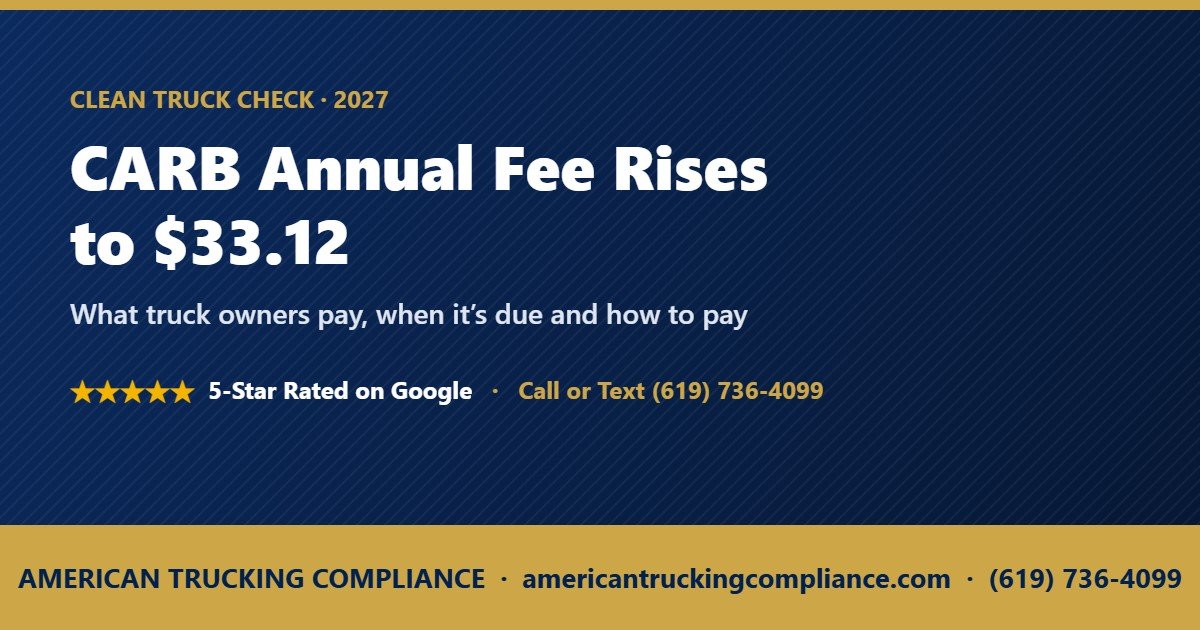
The Clean Truck Check annual compliance fee is going up to $33.12 per truck. CARB announced the new amount for compliance deadlines on or after January 1, 2027. It’s a small bump, but the fee has to be paid on time for every truck, every year, or the truck can’t get the compliance certificate that Amazon, brokers, the ports and the DMV look for. Here’s what’s changing, why, and how to pay without delays.
- The fee rises from $32.13 to $33.12 per vehicle for compliance deadlines on or after January 1, 2027.
- It’s due on your first compliance deadline of the calendar year.
- Card payments carry a 2.99% convenience fee and take 1 to 2 business days to process; e-checks are free but take up to 7.
- No fee means no certificate, and possibly a DMV registration hold.
5-Star Rated on Google. Truck owners across the country trust ATC with their compliance to avoid downtime and fines. Read our Google reviews →
Need a Clean Truck Check? Our mobile CARB Clean Truck Check comes to your yard, home or job site: $110 in Southern California and $100 in Las Vegas, with a free pre-check, results submitted to CARB and one free retest.
What’s Changing
Current fee
$32.13 per vehicle
2027 fee
$33.12 per vehicle, for compliance deadlines on or after January 1, 2027
CARB set the fee at $30 per vehicle when Clean Truck Check started, and it adjusts every year. CARB posts each new amount by July 1, and it takes effect the following year (CARB fee update).
Why the Fee Went Up
Senate Bill 210 requires CARB to adjust the fee every year based on the California Consumer Price Index. For 2027, CARB multiplied the current fee by the change in the index from 2024 (341.951) to 2025 (352.508):
$32.13 × (352.508 ÷ 341.951) = $33.12
Who Pays the Clean Truck Check Fee
CARB assesses the fee to owners of vehicles subject to Clean Truck Check. That covers nearly all non-gasoline heavy-duty vehicles over 14,000 lbs GVWR operating in California, including trucks plated in Nevada and other states. Gasoline trucks aren’t covered.
What It Costs Your Fleet
| Fleet size | At $32.13 | At $33.12 (2027) | Difference |
|---|---|---|---|
| 1 truck | $32.13 | $33.12 | +$0.99 |
| 5 trucks | $160.65 | $165.60 | +$4.95 |
| 10 trucks | $321.30 | $331.20 | +$9.90 |
| 25 trucks | $803.25 | $828.00 | +$24.75 |
| 50 trucks | $1,606.50 | $1,656.00 | +$49.50 |
CARB fees only. Card payments add CARB’s 2.99% convenience fee; e-checks don’t.
Our CARB Account Management service sends reminders and pays your fees from your own CTC-VIS account, with your card securely on file. As low as $12.50/month.
When the Fee Is Due
CARB says the annual compliance fee is due on the first compliance deadline of the calendar year (CARB FAQ). Your deadlines depend on where the truck is registered: California-plated trucks follow their DMV registration renewal date, and trucks plated elsewhere follow a schedule based on the last digit of the VIN.
Plan around processing time. CARB generates certificates only after payment fully processes, so a card payment made the day before a deadline or a California load may not clear in time.
How to Pay in CTC-VIS
Sign in to CTC-VIS
Use the email your entity account was created with. Locked out? See our CTC-VIS login guide.Add each truck to your cart
Click “Add to Cart” for every vehicle that owes the fee, then “Proceed to Checkout.”Choose how to pay
Debit or credit card (2.99% convenience fee, 1 to 2 business days to process) or e-check (no fee, up to 7 business days). CARB recommends Microsoft Edge for payments.Save your receipt
Receipts live under Entity Details, then Fees & Payments.Download your certificate
Once the truck is compliant, CARB generates the certificate about one business day after payment processes. Download it from your vehicle list and upload it wherever it’s needed.Steps from CARB’s CTC-VIS user guide.
What Happens If You Don’t Pay
- No certificate. The truck stays non-compliant in CTC-VIS until the fee is fully processed.
- DMV registration hold. For California-registered trucks, an unmet CARB requirement can block registration (CARB on DMV holds).
- Lost loads. Amazon Relay rejects trucks without valid certificates at check-in, brokers must verify compliance before dispatch, and seaports and railyards have their own Clean Truck Check duties (CARB broker rules).
We run Clean Truck Check tests at your yard across Southern California and Las Vegas, and can handle your CTC-VIS account too.
Clean Truck Check Annual Fee FAQ
How much is the Clean Truck Check annual fee in 2027?
$33.12 per vehicle for compliance deadlines on or after January 1, 2027, up from $32.13.
Why did the CARB annual compliance fee go up?
Senate Bill 210 requires CARB to adjust the fee every year using the California Consumer Price Index. CARB multiplied $32.13 by the change in the index from 2024 to 2025 to get $33.12.
When is the Clean Truck Check fee due?
CARB says the annual compliance fee is due on the first compliance deadline of the calendar year.
How do I pay the Clean Truck Check fee?
In CTC-VIS, add each vehicle to your cart, check out, and pay by debit or credit card (2.99% convenience fee) or e-check (no fee). Card payments take 1 to 2 business days to process and e-checks up to 7.
What happens if I don’t pay?
Your truck stays non-compliant, so CARB won’t issue a compliance certificate. California-registered trucks can get a DMV registration hold, and Amazon, brokers and freight facilities can turn non-compliant trucks away.
Do out-of-state trucks pay the fee?
Yes. The fee applies to vehicle owners subject to Clean Truck Check, which covers nearly all non-gasoline heavy-duty vehicles over 14,000 lbs GVWR operating in California, wherever they’re registered.
Official Sources
- CARB: Annual vehicle compliance fee update (2027)
- CARB: Clean Truck Check FAQ
- CARB: CTC-VIS Online User Guide
- CARB: DMV registration hold (SB 210)
- CARB: Requirements for freight contractors and brokers
- CARB: Requirements for seaports and railyards
- Amazon Relay: CARB compliance requirements to haul with Amazon Relay
- CARB: Clean Truck Check program
American Trucking Compliance is a privately owned, licensed service provider. We are not affiliated with Amazon, Amazon Relay, CARB, the DMV or any government agency. Requirements can change; always confirm in your accounts and on CARB’s website. Last reviewed October 2026.